What Kind of Ancestor Will You Be?
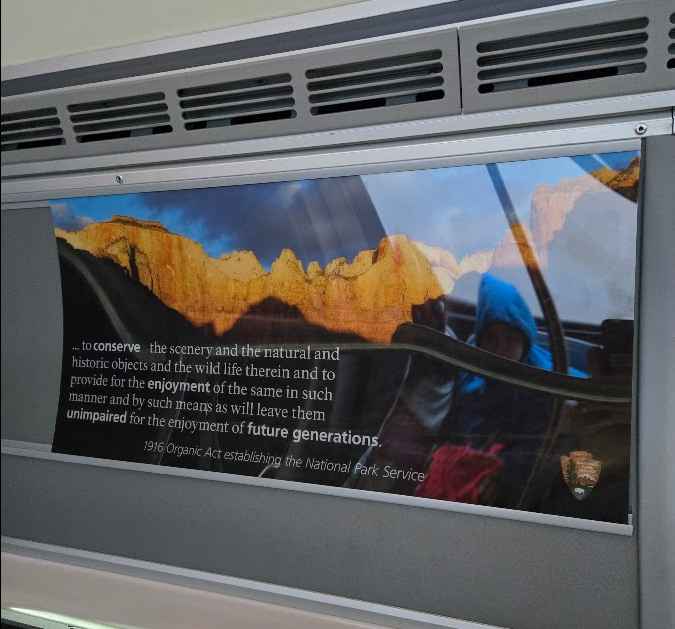
I spent a week earlier this spring in Utah, visiting the Mighty Five national parks, and I came across a quote on a sign that I have not stopped thinking about.
"To conserve the scenery and the natural and historic objects and the wildlife therein and to provide for the enjoyment of the same in such manner and by such means as will leave them unimpaired for the enjoyment of future generations."
(Organic Act of 1916, establishing the National Park Service)
Walking through those parks 110 years after those words were written, I found myself thinking about something my former boss, and now friend, coach, and mentor, Beth Tuttle, once shared with me during a major change management process.
It later became an idea I leaned on when working with a senior leadership team and board that was reluctant to make structural changes. They were drawing more from the endowment each year than the endowment was earning, yet they felt little urgency because the balance sheet still looked strong. My concern was not the immediate optics. It was the long-term effect of using endowment draws to cover what was already a significant operating deficit, particularly in an environment where wage inflation would only make that gap harder to close. Over the prior five years, the total draw percentage had outpaced the annualized rate of return.
The Twenty-Year Argument
From leadership's perspective, there was still enough money to last another 20 years. They were essentially saying, "We have enough to get through the next decade or two. Why act now?" They also believed that continued endowment fundraising would eventually close the gap between the annual draw and investment performance.
I found both arguments unconvincing. I remember asking Beth for advice, and she offered a framing I have never forgotten: get leaders to think of themselves as ancestors to the people who will inherit the institution decades from now.
The Ancestor Test
When a future board looks back on this moment, what will they see? Will they see great ancestors who had the courage to do difficult work when it was necessary? Will they feel gratitude that their predecessors faced reality early, made painful choices, right-sized the institution, and preserved it for the long term? Or will they inherit a mess and wonder why the people before them chose comfort over stewardship?
The people who created the national parks were thinking in exactly that way. They were not making decisions only for themselves or even for their own generation. They were acting as ancestors. They understood that stewardship means preserving something precious in a way that allows future generations to enjoy it fully, rather than consuming as much of it as possible while it is still available.
The Fragility of Stewardship
We now know how fragile that stewardship can be. Parts of our national parks have had to be restricted, rerouted, or more heavily managed because the public has not always treated these places with the care they require. The damage may not always come from malice. Often it comes from shortsightedness, convenience, and the false assumption that what is here today will somehow remain here tomorrow.
Nonprofits face the same dynamic. The endowment that took decades to build can be drawn down in a fraction of that time. The reserves that gave the organization room to take risks can be depleted by a few years of "we'll catch up next year." The donor relationships that were nurtured across generations can fray when stewardship gives way to extraction.
The Real Leadership Test
That, to me, is the real leadership test. Stewardship is not about preserving comfort for the current generation of decision-makers. It is about accepting responsibility for people you will never meet.
The best leaders understand that their job is not simply to keep things going while they are in charge. Their job is to leave behind an institution that is stronger, healthier, and more durable because they were willing to face hard truths before those truths became irreversible.
In that sense, every board member, executive, donor, and trustee is already an ancestor. The only question that remains is what kind of ancestor they choose to be.